
Oracle's Stock Plunge: A Glitch in the Matrix or a Launchpad to the Future?
Okay, let's talk about Oracle. I know, I know, "enterprise software" doesn't exactly scream "thrilling future," but stick with me. We've seen headlines about ORCL stock taking a nosedive – down 30% in a month! Wiping out billions! It's enough to make anyone panic, right? But what if this isn't a disaster, but instead a vital course correction? What if it is the market briefly losing its mind?
The AI Gamble: Is Oracle Playing Chess or Checkers?
See, everyone's buzzing about AI right now – NVDA, MSFT, META – the usual suspects. But Oracle? They're playing a different game. A bigger game, maybe. Their massive $300 billion deal with OpenAI, for example. Some are calling it a "reverse Midas touch," worrying about the capital expenditures, the debt load. Credit default swaps are flashing warning signs, client concentration risks are making people nervous. But I see something else: a bold, audacious bet on the future.
Think about it: Oracle is basically building the picks and shovels for the AI gold rush. They're not just creating AI models; they're providing the infrastructure, the cloud computing (OCI) backbone that everyone will need. It’s like during the California gold rush; the guys selling shovels made more money than most of the prospectors.
Yes, their cloud market share (3% compared to AWS's 29%, Azure's 20%, and Google's 13%) is a concern. But OCI is growing rapidly! And that massive $455 billion in remaining performance obligations (RPO), a dramatic 359% increase year over year, that’s not just smoke and mirrors, folks. That's real, tangible future revenue locked in. Oracle themselves are forecasting $185 billion in revenue by fiscal 2029 and $225 billion by fiscal 2030, that is a 31% annual growth rate! This isn't just incremental growth; this is exponential.
Now, about that debt. Yes, $111 billion is a hefty number, and the plan to raise another $38 billion for AI infrastructure expansion is definitely raising eyebrows. But consider the context: they're investing in the future. They are building the infrastructure for the next industrial revolution. Were talking AI folks! It’s not just about Oracle’s bottom line; it's about enabling innovation across the board.
And let's be real, Oracle Health (Cerner) isn't exactly setting the world on fire right now. Sales are predicted to be flat, and there are client satisfaction challenges. But healthcare is a notoriously slow-moving industry. It takes time to disrupt, to transform. Oracle is in it for the long haul, and their vision for a data-driven, AI-powered healthcare system is compelling.
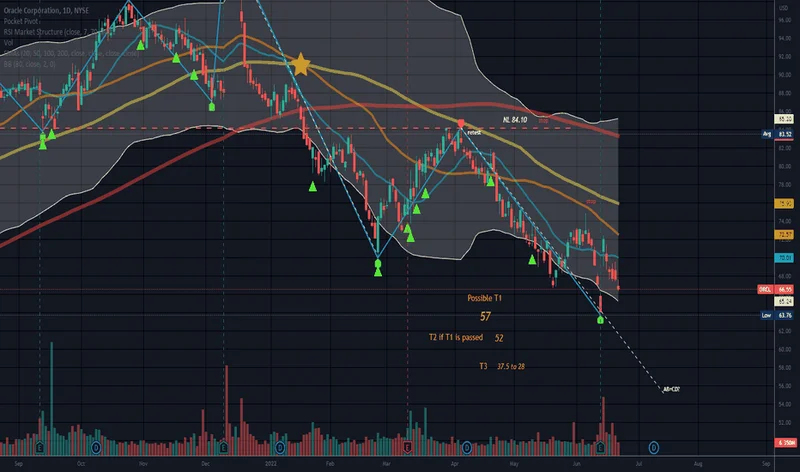
So, why the stock drop? My take? The market is impatient. Wall Street wants instant gratification, immediate returns. They see the debt, the capital expenditures, the lagging cloud margins, and they freak out. They forget that building the future takes time, takes investment, takes risk. Why Is Oracle Stock Dropping?
But here's the thing: risk is where the biggest rewards lie. Oracle is not playing it safe. They're swinging for the fences. And while there's always a chance they could strike out, the potential upside is enormous.
Consider this: Baird lowered its price target for Oracle to $315, but still kept an "Outperform" rating. Even with the concerns, even with the stock drop, analysts see the underlying value, the long-term potential.
What does all this mean for us, for you? Imagine a world where AI is seamlessly integrated into every aspect of our lives, from healthcare to education to transportation. Imagine a world where data-driven insights are readily available to everyone, empowering us to make better decisions, to live healthier lives, to create a more sustainable future.
That's the world Oracle is building. And while the road may be bumpy, the destination is worth it.
Of course, we need to be mindful of the ethical implications. With great power comes great responsibility. We need to ensure that AI is used for good, that it benefits everyone, not just a select few. We need to address the potential for bias, for discrimination, for job displacement. But these are challenges we can overcome, challenges we must overcome, if we want to realize the full potential of this transformative technology.